
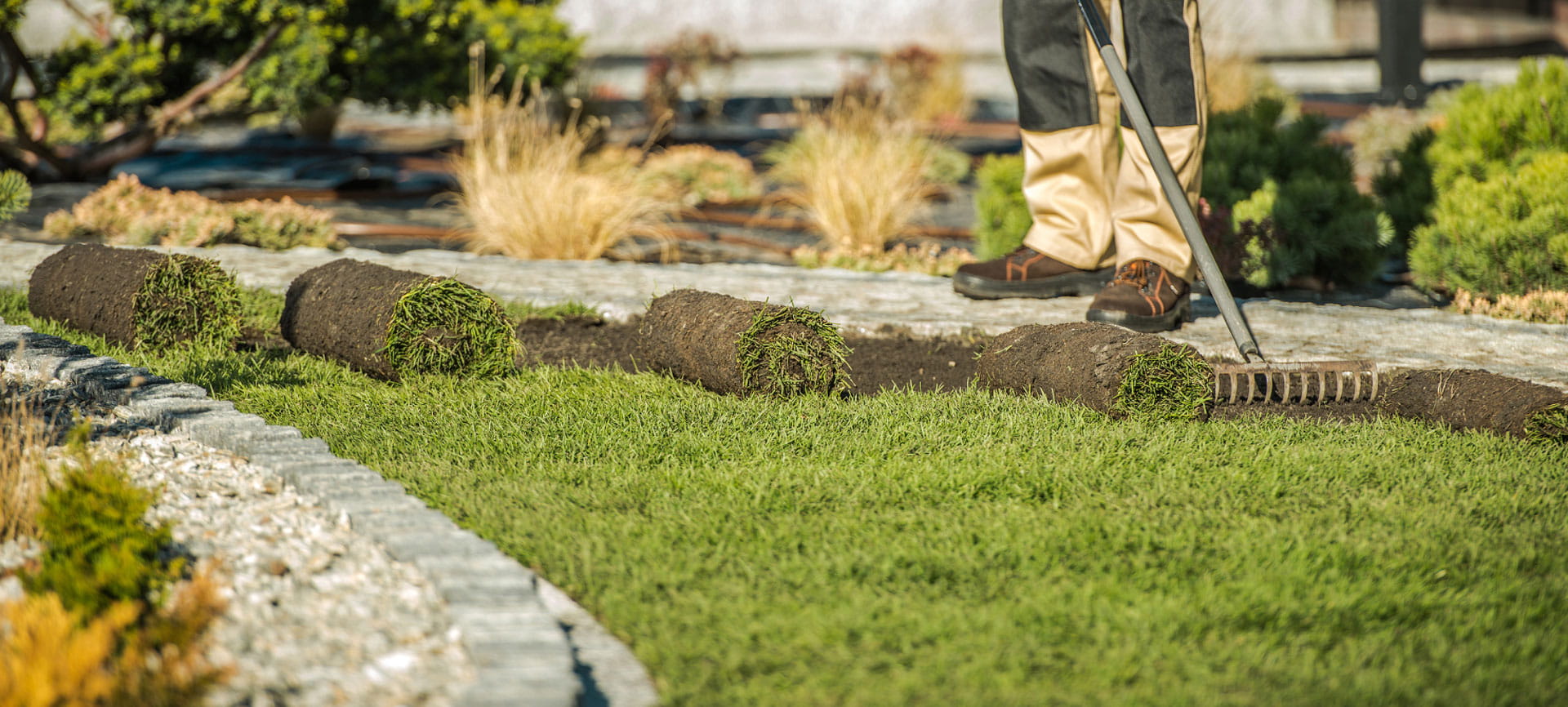

Walk into most landscape conversations in July and you’ll hear the same instinct: wait until fall. It’s too hot. The ground is baked. The sod won’t take. Better to let summer pass and install when the weather breaks.
It’s an understandable instinct. It’s also, in many cases, wrong.
At GLM Landscape Supply, we’ve been working with homeowners, landscapers, and contractors across Milton, Alpharetta, Roswell, and the wider North Atlanta area for more than a decade. We watch a lot of sod go into the ground every month of the year, and July sod installation — done correctly — succeeds at a high rate. The key phrase there is done correctly. Because July sod installation doesn’t follow the same rules as spring or fall installation, and treating it like it does is where homeowners run into trouble.
Here’s what you actually need to know.
Why Warm-Season Grasses Love July
This is the starting point that changes the whole conversation: not all sod behaves the same way in summer heat. Cool-season grasses — primarily fescue — are genuinely stressed by Georgia’s midsummer heat and are better suited to fall installation. But the warm-season grasses that dominate North Atlanta lawns are a different story entirely.
Bermuda, zoysia, centipede, and St. Augustine are all warm-season varieties that reach peak growth activity when soil temperatures are at their highest — exactly the conditions present in a North Georgia July. The biological machinery driving root establishment runs fastest when the soil is warm. A Bermuda or TifGrand zoysia plug installed in July isn’t fighting the heat — it’s thriving in it, pushing roots down aggressively into warm soil while every growing condition is aligned in its favor.
At GLM, we carry premium varieties including TifGrand Bermuda, a heat-tolerant turf developed by University of Georgia turfgrass breeders that handles North Georgia summers with remarkable resilience. The sod we source from our partner farms in the Southeast is hand-selected for freshness and root health — because the quality of what goes in the ground on day one determines how well it establishes in the weeks that follow.
The Real Variable: Water
If warm-season sod loves July, the thing that can defeat it in July is inadequate irrigation during the establishment window. This is the single factor that separates successful summer sod installation from failed summer sod installation, and it is the detail that requires honest attention before the first pallet is laid.
Newly installed sod needs enough water to keep the root zone moist continuously during the first two weeks — not just watered, but actively moist. In Georgia’s July heat, evaporation is aggressive, and the sod cannot afford to dry out and be rehydrated repeatedly before its roots have anchored into the soil below. The watering schedule for July-installed sod is more demanding than for spring or fall installs, and homeowners who aren’t prepared to commit to it — either manually or through an irrigation system — should either schedule installation for a cooler period or ensure they have a reliable watering plan in place before delivery day.
The practical standard for July: water newly installed sod two to three times daily for the first seven to ten days, then taper to once daily in the second week, then gradually reduce as root establishment is confirmed. You can test establishment by gently tugging the sod — once it resists and doesn’t lift, the roots are anchoring.
Soil Preparation Matters More in Summer
In spring or fall, the soil has more margin for error. Roots establish over a longer, cooler window, and the grass has time to compensate for imperfect soil conditions. In July, there is less margin. Getting the soil right before installation is not optional.
For North Georgia’s clay-heavy soils — which compact easily, drain poorly, and resist root penetration when dry — proper soil preparation before summer sod installation makes a meaningful difference in outcome. Breaking up compaction, grading for drainage, and incorporating the right soil amendments to improve permeability creates conditions where roots can move freely and water can penetrate rather than pooling on the surface.
At GLM, our soil mixes are formulated specifically for North Georgia conditions. Our Sod Mix provides the nutritional and structural foundation that newly installed sod needs to establish quickly, and our team can advise on the right preparation approach for your specific property and soil conditions. Homeowners who call ahead and discuss their project with us leave better prepared — and their sod leaves with a much better chance of success.
When Fescue Needs to Wait (and What to Do Instead)
This is the honest part of the July sod conversation: if your lawn is primarily tall fescue, July is genuinely not the right installation window. Fescue is a cool-season grass that experiences significant heat stress when soil temperatures exceed the upper 70s. Installing fresh fescue sod in July puts it under immediate thermal stress before its roots have had any chance to establish — and the failure rate reflects that.
For fescue lawns with damaged, bare, or thin areas in July, the right approach is typically overseeding timed for September, when soil temperatures begin to drop into fescue’s ideal germination range. In the meantime, proper irrigation of existing turf, addressing soil compaction, and getting materials ready for fall is the most productive use of the summer months.
If you have a mix of sun and shade conditions across your property — common in established North Atlanta neighborhoods with mature trees — July may be an opportunity to install warm-season varieties in the full-sun areas while planning fescue overseeding for the shaded sections in fall. Our team at GLM can help you develop that kind of phased approach.
What to Order, How Much, and When
One of the most practical things to know about summer sod installation is that timing from order to installation matters more than in cooler months. Fresh sod is a living product with a limited window of viability after harvest — in summer heat, that window is shorter than in spring or fall. Ordering your sod for delivery as close to installation day as possible, rather than letting it sit in pallets in the heat for days, protects the investment you’re making.
When calling GLM to discuss your project, we’ll ask about the area you’re covering, the sun and shade conditions, the variety you’re interested in, and your soil preparation status — so we can help you time your order appropriately and ensure you’re receiving fresh product directly from our partner farms.
We deliver throughout the Atlanta metro area and North Georgia, including Alpharetta, Milton, Roswell, Canton, Woodstock, Duluth, Kennesaw, and surrounding communities. Our team loads you up at our Hwy 9 North location as well for pickup if you prefer.
Call GLM Before the Summer Window Closes
The warmest soil temperatures of the year — and the most favorable root establishment conditions for warm-season grasses — are here right now. If your yard has bare patches, thin coverage, or areas you’ve been meaning to address, this is the window that warm-season sod was built for.
Call GLM Landscape Supply at (770) 664-8200 to discuss your project, get pricing, and schedule your delivery. We’re located at 13975 Hwy 9 North in Alpharetta and have served North Georgia homeowners and landscaping professionals for over a decade. Let’s get your lawn where you want it — before summer passes.
Posted on behalf of
13975 Hwy 9
Alpharetta, GA 30004
Phone: (770) 664-8200
Email: [email protected]
Mon-Fri: 7:30 a.m. - 5 p.m.Sat: 7:30 a.m. - 12 p.m.
Sun: Closed