
The heat has finally broken, the mornings have a little bite to them, and your lawn is probably showing every scar a Georgia summer left behind. Thin spots under the oaks. Bare patches where the dog runs the fence line. That stubborn brown strip along the driveway that never quite recovered from July.
Here’s the good news: October is one of the best months of the year to fix all of it, especially if you’re working with fescue. At GLM Landscape Supply, we’ve spent more than a decade helping homeowners across Alpharetta, Milton, Duluth, Woodstock, and Gainesville choose the right sod and soil for their yards. Every fall, we see the same pattern: the homeowners who install fescue now are the ones with the best-looking lawns on the street come April.
Let’s talk about why fall timing matters, how to prep your yard, and what to do if your lawn isn’t a fescue lawn at all.
Why Fescue and Fall Go Together
Fescue is a cool-season grass. That means it grows most actively when air temperatures sit comfortably between the 60s and 70s, which is exactly the stretch North Atlanta enjoys from late September through November. Summer heat stresses fescue, and spring installations have to race the calendar to root in before the first 90-degree week arrives.
Fall flips that script. When you lay fescue sod in October, you get:
- Warm Soil, Cool Air: The ground is still holding summer warmth, which encourages fast root growth, while cooler air temperatures reduce stress on the blades.
- Less Water Loss: Shorter days and milder afternoons mean less evaporation, so your irrigation goes further during establishment.
- Fewer Weeds Competing: Most summer weeds are winding down, giving new sod room to knit into the soil without a fight.
- A Long Runway to Spring: Fescue installed in fall has months to build a deep root system before it faces its first summer.
Think of fall installation as giving your lawn a head start. By the time spring green-up arrives, fall-installed fescue has already done the hard work underground.
Meet Rebel Supreme Fescue
The fescue we carry at GLM Landscape Supply is Rebel® Supreme, a variety developed with southern lawns in mind. Its standout trait is a deep root system, which helps it hold up better during the dry spells that often hit metro Atlanta in late summer.
Rebel Supreme is a popular choice for homeowners who want that lush, deep-green, cool-season look, and who have yards with a mix of sun and partial shade. It stays green longer into the cooler months than warm-season grasses, which is a big reason fescue lawns are so common in North Fulton, Forsyth, and Cherokee counties.
That said, fescue isn’t the right fit for every yard. Lawns that bake in full sun all day, or that see heavy foot traffic, may be better served by a warm-season variety. Our team is always happy to walk through your yard’s conditions with you before you buy.
Prep Work That Makes or Breaks Fall Sod
Sod is only as good as the ground underneath it. Georgia’s native red clay is dense, compacts easily, and is notoriously low in nutrients. Laying fresh sod directly on hard clay is one of the most common reasons new lawns struggle.
Here’s a simple prep sequence that sets your fescue up for success:
- Clear the Area: Remove old turf, weeds, rocks, and debris so the new sod makes full contact with the soil.
- Loosen the Ground: Till or rake the top few inches of soil to break up compaction and give new roots room to move.
- Add a Quality Soil Layer: Spread a layer of our Sod Blend soil to give roots a nutrient-rich, well-draining zone to grow into.
- Grade for Drainage: Smooth and slope the surface slightly away from your home so water doesn’t pool on new sod.
- Lightly Water Before Installing: Moist (not soggy) soil helps sod roots connect faster once it’s laid.
If you’re not sure how much soil you need, our online calculators can help you estimate quantities before you place an order.
Installing and Caring for New Fescue Sod
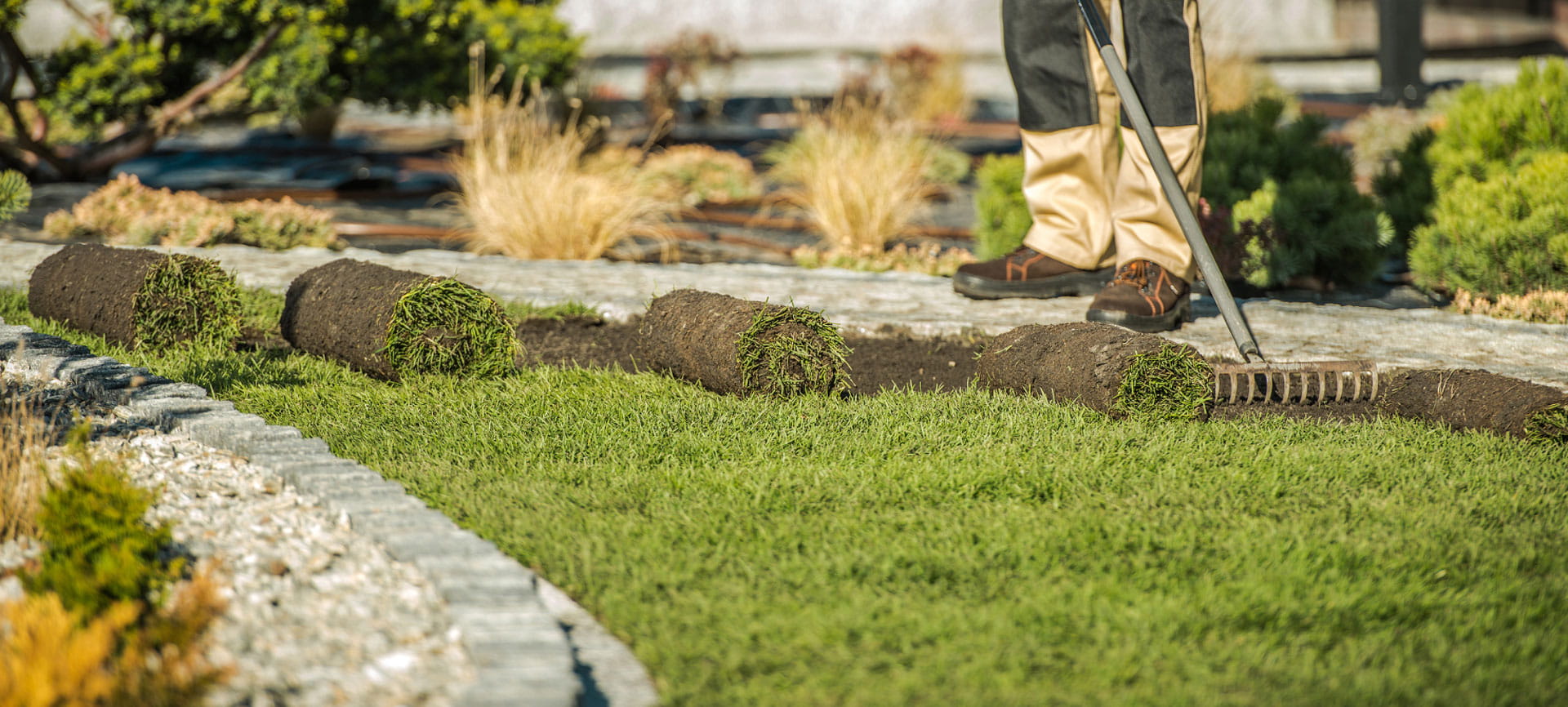
Once your ground is ready, timing still matters. Fresh sod is a living product, so plan to install it the same day it arrives. Stagger the seams in a brick-like pattern, press each piece firmly into the soil, and avoid stretching pieces to fill gaps.
After installation, your new lawn needs a little extra attention:
- Water Right Away: Soak new sod within 30 minutes of laying it so moisture reaches the soil below.
- Keep It Consistently Moist: For the first couple of weeks, frequent, lighter watering helps roots grab hold. Gradually shift to deeper, less frequent watering as the sod establishes.
- Stay Off It: Limit foot traffic, kids, and pets until the sod roots in and resists a gentle tug.
- Mow High: When it’s time for the first mow, keep your blades high and never remove more than a third of the grass height at once.
- Watch the Weather: Fall rain can do some of the watering for you, so adjust your schedule to avoid oversaturating the soil.
Every yard is different, and factors like slope, shade, and soil type can change how quickly your sod establishes. If something looks off, bring your questions to our team.
What If You Have a Warm-Season Lawn?
Not every North Atlanta lawn is fescue. Many homeowners have Bermuda, zoysia, or centipede, and those grasses follow a very different calendar. Warm-season grasses slow down as temperatures drop and head toward winter dormancy, turning tan until spring.
If you have a warm-season lawn, fall is usually a better time for planning than planting. Warm-season sod generally establishes best when it’s actively growing in late spring and summer. Use the cooler months to:
- Map Problem Areas: Note where your lawn thinned out this year so you know exactly what to replace in spring.
- Test Your Soil: Understanding your soil now helps you plan the right amendments ahead of the growing season.
- Choose Your Variety: We carry Meyer, Zeon, and Zorro Zoysia along with TifGrand, TifTuf, and TifWay 419 Bermuda and TifBlair Centipede, each with different strengths for sun, shade, and traffic.
Some homeowners also use fall as the moment to rethink their lawn entirely. A shady yard where Bermuda has struggled for years might be a great candidate for fescue or a shade-tolerant option like TifGrand or Zorro.
Fall Sod FAQs
- Can I install fescue sod in November? In many years, yes. Early-to-mid fall is ideal, but fescue can often be installed later as long as the ground isn’t frozen. The earlier you install, the more time roots have to establish before winter.
- Should I fertilize new sod right away? It’s best to let sod root in first. A good soil layer like our Sod Blend gives new grass the nutrients it needs to get started.
- How do I know if my sod has rooted? Gently lift a corner after a couple of weeks. If it resists, roots are taking hold.
- Do you deliver sod? Yes. We deliver throughout the Atlanta metro area and north of Alpharetta into North Georgia.
Get Your Lawn Ready for Spring with GLM Landscape Supply
A great spring lawn starts with the work you do this fall. Whether you’re ready to lay Rebel Supreme Fescue this month or planning a warm-season refresh for next year, GLM Landscape Supply has the sod, soil, and know-how to help you do it right.
Stop by one of our four North Atlanta locations:
- Alpharetta: 13975 Hwy 9
- Duluth: 4589 Abbotts Bridge Rd
- Woodstock: 7318 Hickory Flat Hwy
- Gainesville: 2348 Monroe Drive
We’re open Monday through Friday from 7:30 a.m. to 5 p.m. and Saturday from 7:30 a.m. to noon. Let’s make this the fall your lawn finally gets the fresh start it deserves.
Posted on behalf of
13975 Hwy 9
Alpharetta, GA 30004
Phone: (770) 664-8200
Email: [email protected]
Mon-Fri: 7:30 a.m. - 5 p.m.Sat: 7:30 a.m. - 12 p.m.
Sun: Closed